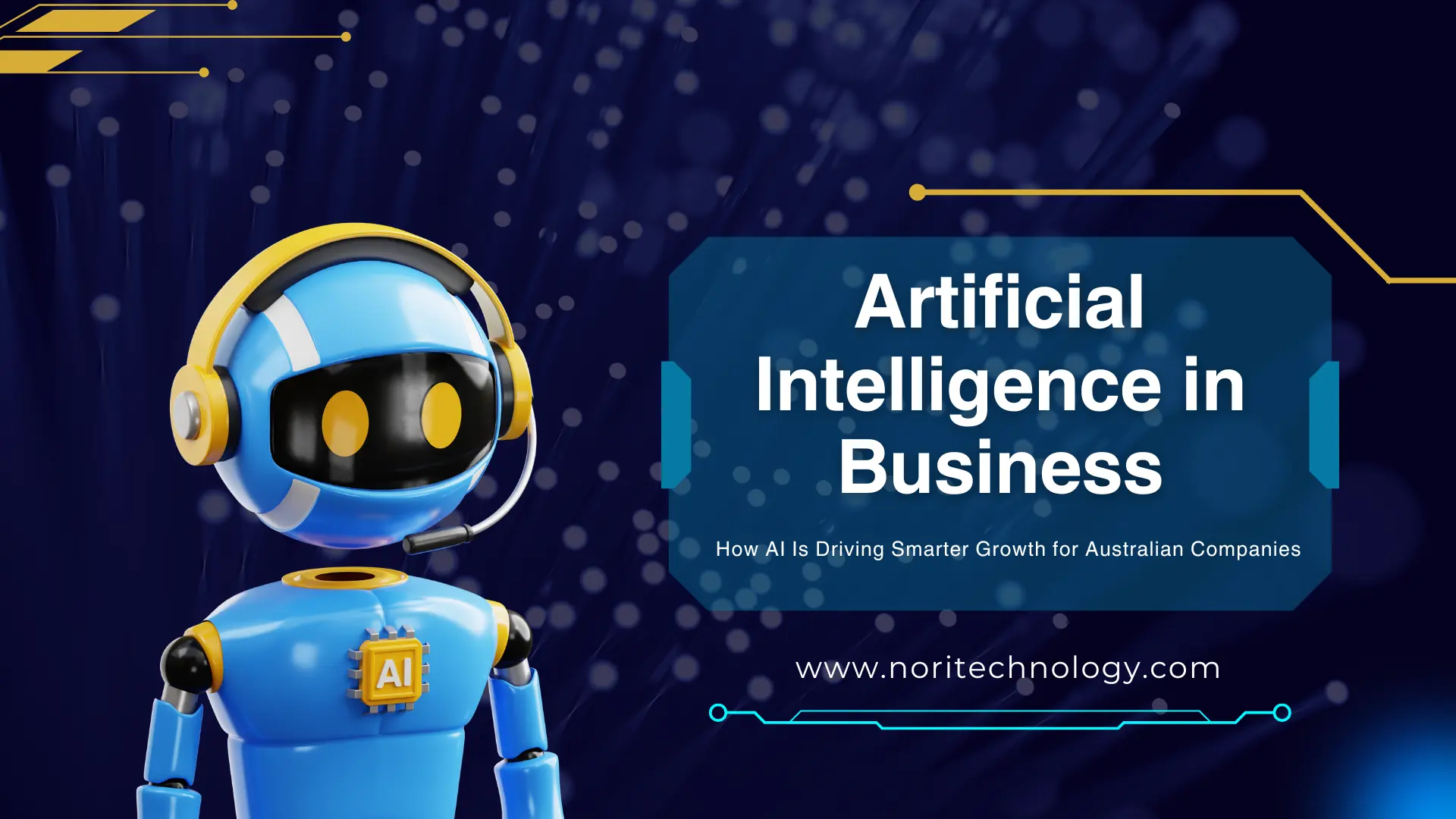
Artificial Intelligence in Business: How AI Is Driving Smarter Growth for Australian Companies
Artificial Intelligence (AI) has rapidly evolved from an emerging technology to a practical business tool. Across Australia, companies are embracing AI to boost efficiency, enhance customer experiences, and make informed decisions based on data.
AI is no longer limited to large enterprises with big budgets. With cloud-based platforms and scalable solutions, businesses of all sizes can now leverage AI to gain a competitive advantage. This blog explores how AI is being used in business today, its benefits, and how organisations can begin their AI journey.
What Is Artificial Intelligence?
Artificial Intelligence refers to systems that can perform tasks typically requiring human intelligence. These tasks include learning from data, recognising patterns, making predictions, and automating processes.
Common AI technologies include:
- Machine learning
- Natural language processing
- Computer vision
- Predictive analytics
Together, these technologies allow businesses to operate more efficiently and intelligently.
How Businesses Are Using AI Today
1. Business Process Automation:
AI helps automate repetitive tasks such as data entry, invoice processing, and scheduling. Automation reduces errors and frees employees to focus on higher-value work.
2. Customer Support and Chatbots:
AI-powered chatbots provide instant customer support, answer common questions, and operate around the clock, improving customer satisfaction.
3. Data Analysis and Insights:
AI analyses large datasets quickly, helping businesses identify trends, forecast demand, and make informed decisions.
4. Marketing and Personalisation:
AI enables personalised marketing campaigns by analysing customer behaviour and preferences, leading to better engagement and conversion rates.
Key Benefits of AI for Businesses
AI adoption offers measurable advantages for organisations across industries.
Major benefits include:
- Improved operational efficiency
- Reduced costs through automation
- Faster and more accurate decision-making
- Enhanced customer experience
- Scalable solutions that grow with the business
These benefits contribute directly to long-term business growth.
AI and Small to Medium-Sized Businesses
Small and medium-sized businesses are increasingly adopting AI due to its affordability and flexibility.
AI helps smaller businesses by:
- Competing with larger organisations
- Improving productivity with limited resources
- Gaining insights without large analytics teams
- Enhancing customer interactions
AI levels the playing field and supports sustainable growth.
Challenges of AI Adoption
While AI offers significant benefits, adoption also presents challenges.
Common challenges include:
- Data quality and availability
- Integration with existing systems
- Cybersecurity and data privacy concerns
- Skills and training requirements
Addressing these challenges early ensures successful AI implementation.
Preparing Your Business for AI
Successful AI adoption requires planning and the right technology foundation.
Steps to prepare include:
- Identifying processes suitable for automation
- Ensuring secure and reliable data systems
- Upskilling employees
- Working with experienced technology partners
A structured approach reduces risk and maximises ROI.
The Role of Technology Partners
Technology partners play a critical role in guiding AI adoption. They help businesses choose the right tools, manage integration, and ensure security.
A trusted partner can assist with:
- AI strategy and roadmap development
- Implementation and optimisation
- Ongoing support and maintenance
- Cybersecurity and compliance
Conclusion:
Artificial Intelligence is transforming how Australian businesses operate and compete. From automation and analytics to customer engagement, AI provides practical solutions that drive efficiency and innovation.
By adopting AI strategically and working with experienced technology partners, businesses can unlock new opportunities and build a stronger, future-ready organisation.
Frequently Asked Questions:
Is AI suitable for small businesses?
Yes, many AI solutions are scalable and affordable for small businesses.
Does AI replace human workers?
AI supports employees by automating repetitive tasks rather than replacing jobs entirely.
How long does AI implementation take?
Timelines vary depending on complexity, but many solutions can be implemented within weeks.
.webp)